martes, 5 de abril de 2016

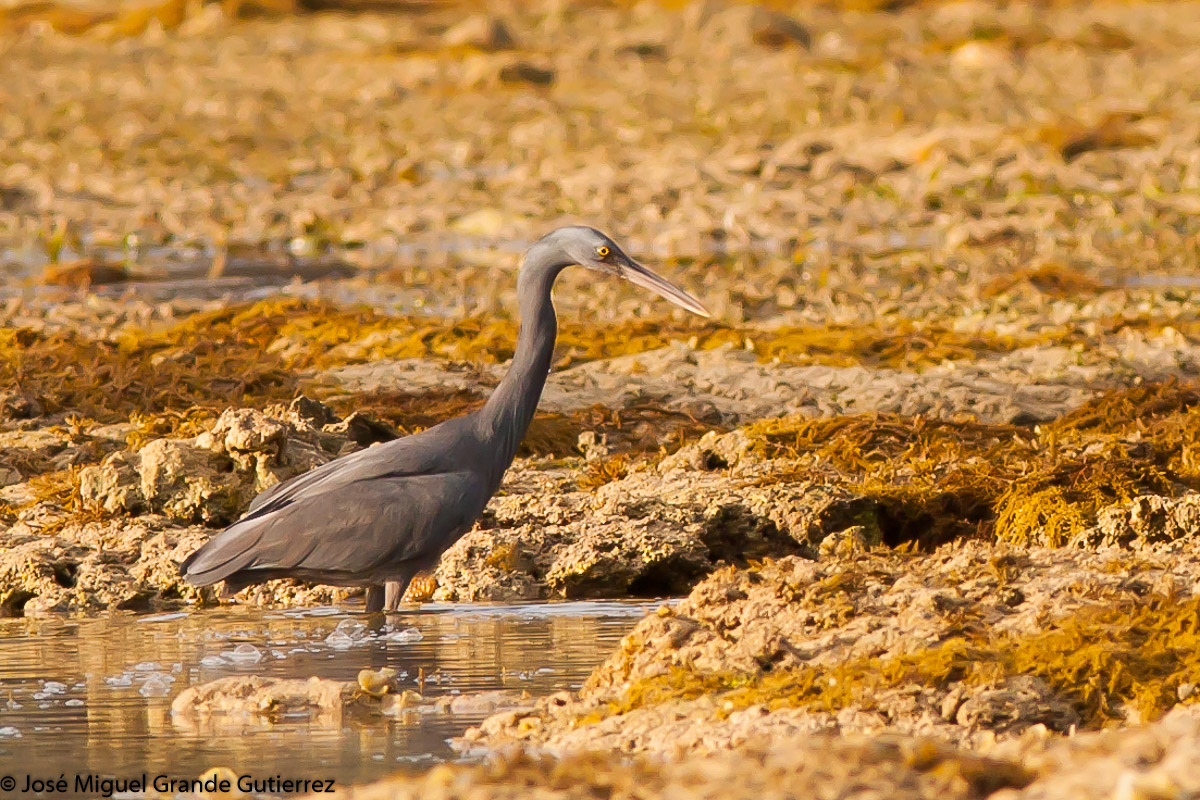
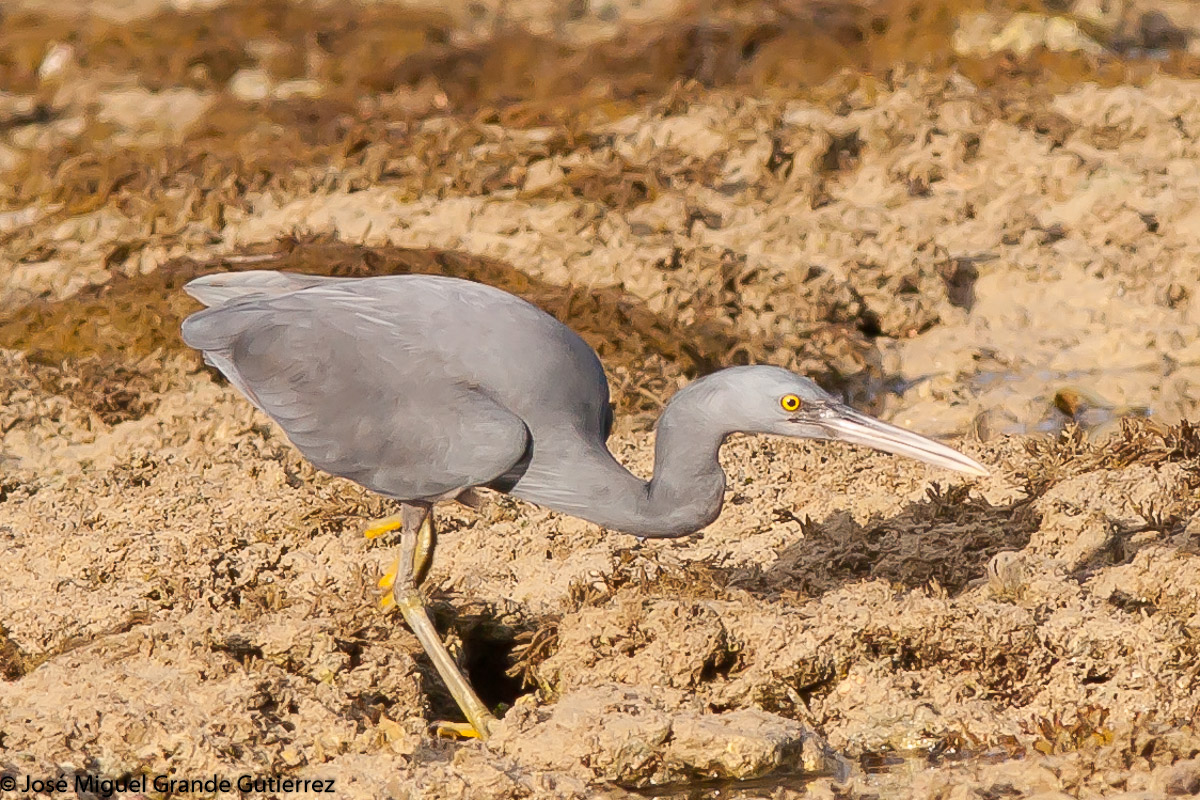
GARZA DE ARRECIFE-La garceta de arrecife o garceta costera oriental (Egretta sacra) The Pacific reef heron (Egretta sacra)

The Pacific reef heron (Egretta sacra), also known as the eastern reef heron or eastern reef egret, is a kind of  heron. They are found in many areas of Asia including the oceanic region of  India,Philippines,  Southeast Asia,  East Asia, Polynesia, and in  Australia,  Tasmania and  New Zeland.
Pacific reef herons are medium-sized herons, reaching 57 to 66 cm in length. They have a wingspan of between 90 and 110 cm and reach an average weight of 400 grams.
The species displays an unusual, non-sexual  dimorphism, with some members having entirely white plumage and others (the larger portion) being charcoal-grey. The reason for the colour variation or " morph", is unknown, though it is most commonly thought to be related to camouflage.
The two colour morphs,  Ko Tao Thailand .
Eastern reef egrets have very short, yellow legs, and the grey variety's throats and chins are marked by a narrow, white stripe. They have brown beaks, gold-yellow coloured eyes and the surrounding areas of their faces are normally of a greenish to yellow cast.
Their food sources are made up predominantly of varieties of ocean-based fish,crustaceans and molluscs. The species lay clutches of eggs year round in colonies in the jungle, between palms and mangroves or in cavities of old buildings. Two to three paled greenish-blue eggs are laid in nests constructed from branches and blossoms. Males and females share brooding tasks. They normally have a 28-day brood period. After chicks are hatched, parents provide approximately 5 weeks of support.

La garza del Pacífico de arrecife (Egretta sacra), también conocido como la garza  de  arrecife oriental o garceta arrecife oriental, es una especie  perteneciente a la familia de las garzas. Se encuentran en muchas zonas de Asia, incluyendo la región oceánica de la India, Filipinas, Sudeste de Asia, Asia Oriental, Polinesia, y en Australia, Tasmania y Nueva Zelanda.
 Las Garzas de arrecifes del Pacífico son garzas medianas, alcanzando 57 a 66 cm de longitud. Tienen una envergadura de entre 90 y 110 cm y alcanzan un peso promedio de 400 gramos.
La especie muestra un dimorfismo inusual, no sexual, con algunos miembros que tiene el plumaje totalmente blanco y otros (la porción más grande) es gris oscuro. La razón de la variación de color o "dimorfa", es desconocida, aunque se cree más comúnmente que estar relacionado con camuflaje.
Las dos formas de color,  de las Garcetas de arrecifes orientales tienen muy cortas las patas ,amarillas , gargantas y barbillas de la variedad gris están marcadas por un estrecho, raya blanca. Tienen picos marrones, ojos de color de oro amarillo y las áreas circundantes de sus caras son normalmente de un tono amarillo verdoso
Sus fuentes de alimentos se componen principalmente de las variedades de peces en el océano, crustáceos y moluscos. Las especies ponen nidadas de huevos durante todo el año en las colonias en la selva, entre palmeras y manglares o en cavidades de edificios antiguos. De dos a tres huevos de color verdoso-azules palideció son depositados en nidos construidos con ramas y flores. Machos y Hembras comparten tareas empollando. Normalmente tienen un período de cría de 28 días. Después eclosiaonar los polluelos del cascarón, los padres proporcionan aproximadamente 5 semanas de apoyo.


Avión zapador (Riparia riparia)-Sand martin


Avión zapador


(Riparia riparia)

Es el menor de nuestros aviones y golondrinas. La combinación de pequeño tamaño, color pardo y banda en el pecho resulta clave para identificarlo. Instala sus densas colonias casi exclusivamente en taludes de ríos y graveras, donde excava un túnel en el que nidifica. Escaso en nuestro país como nidificante y sujeto a fluctuaciones, España constituye una zona de paso durante la migración de una parte importante de la muy abundante población europea.
It is the least of our aircraft and swallows. The combination of small size, brown and chest band is key to identify it. Installs its dense colonies almost exclusively on slopes of rivers and gravel pits, where digging a tunnel in which nests. Scarce in our country as nesting and subject to fluctuations, Spain is a passage for migrating an important part of the European population very abundant.


It is the least of our aircraft and swallows. The combination of small size, brown and chest band is key to identify it. Installs its dense colonies almost exclusively on slopes of rivers and gravel pits, where digging a tunnel in which nests. Scarce in our country as nesting and subject to fluctuations, Spain is a passage for migrating an important part of the European population very abundant.


jueves, 31 de marzo de 2016

Ánsar común (Anser anser)-Greylag goose-Oca vulgar-Antzara hankagorrizta


Ansar common


(Anser anser)

It is the largest European geese and is quite abundant in our country during the winter . At this time, the skies of Villafáfila and lagoon of La Nava, las vegas of the Guadiana and the Guadalquivir marshes are furrowed by a multitude of geometric squares of these blatant and large birds, which come to the Peninsula after a journey of thousands kilometers, running from the extremely low temperatures plaguing their breeding grounds in northern Europe.

Description

Classification

Order Anseriformes, Family Anatidae

Length

70-90 cm

Wingspan

147-180 cm

ID

This goose has a general tone gray, fringed with feathers back of cream, which gives this area a scaly appearance; the flanks are darker and are barred by white lines In contrast to the rest of the plumage, the anal region shows a pure white color. The tail is white with a dark band at the top Quite robust appearance, the only difference between males and females lies in the larger of those. Short and strong legs have a pinkish hue, while the peak- of conically shaped orange has the subspecies Anser and rose in rubrirostris race.

Singing

It emits a metallic squawk followed by nasal and gangosas, similar to the claim of domestic goose notes.


Ánsar común


(Anser anser)

Es el mayor de los gansos europeos y resulta bastante abundante en nuestro país durante el invierno. En esta época, los cielos de Villafáfila y la laguna de La Nava, las vegas del Guadiana y las marismas del Guadalquivir se ven surcados por multitud de geométricas escuadras de estas vocingleras y grandes aves, las cuales llegan a la Península tras un viaje de miles de kilómetros, huyendo de las bajísimas temperaturas que asolan sus áreas de cría en el norte de Europa.

Descripción

Clasificación

Orden Anseriformes, familia Anatidae

Longitud

70-90 cm

Envergadura

147-180 cm

Identificación

Este ganso tiene una tonalidad general grisácea, con las plumas del dorso orladas de crema, lo que confiere a esta zona un aspecto escamoso; los flancos resultan más oscuros y están barrados por líneas blancas . En contraste con el resto del plumaje, la región anal muestra un color blanco puro. La cola es blanca, con una banda oscura en la parte superior . De aspecto bastante robusto, la única diferencia existente entre machos y hembras estriba en el mayor tamaño de aquéllos. Las cortas y fuertes patas presentan una tonalidad rosácea, en tanto que el pico —de forma cónica— posee color naranja en la subespecie anser y rosa en la raza rubrirostris.

Canto

Emite un graznido metálico seguido por notas nasales y gangosas, similar al reclamo del ganso doméstico.
Meses